
Содержание
Choosing the right portable mobility scooter is really about choosing a daily independence tool. For seniors, caregivers, and adults with limited walking ability, the best scooter is not simply the lightest model online. It is the one that fits the rider’s routine, the family’s storage space, the vehicle used for outings, and the caregiver’s ability to lift or move it safely.
A good portable scooter should make everyday life easier, not create another heavy object that no one wants to handle.
Portable Means More Than Lightweight
Many people hear «portable» and think only about weight. Weight matters, but true portability has several parts.
A scooter is truly portable when it is:
- Easy to fold or disassemble
- Light enough for the right person to lift
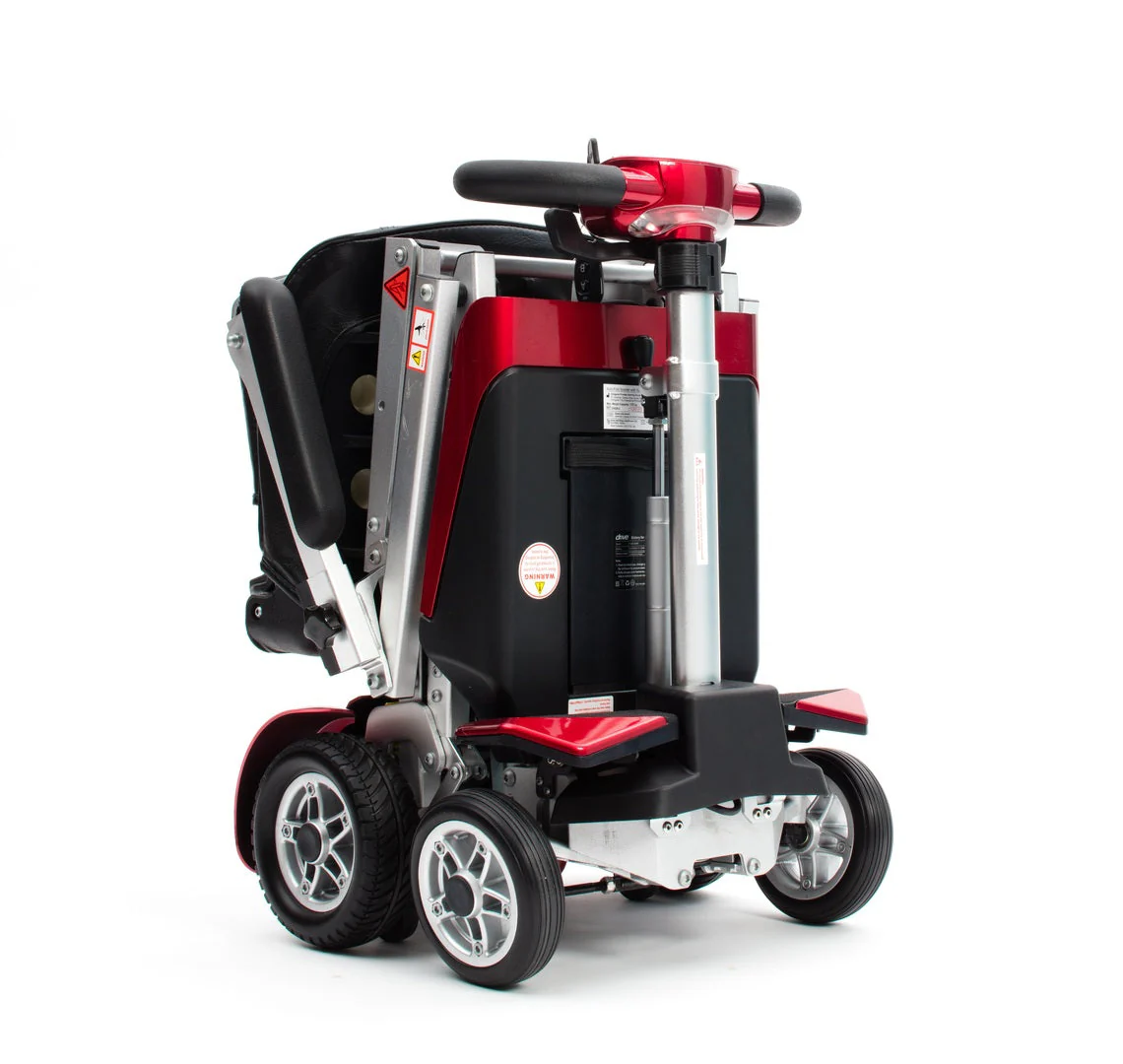
- Compact enough for a car trunk or storage corner
- Simple enough to set up without frustration
- Stable enough for everyday use
- Comfortable enough for real errands, not just short tests
This is why families should think about portable mobility scooters by situation, not just by specification.
Portable for Car Travel
For car travel, the most important question is simple: can the scooter realistically be loaded and unloaded?
A scooter may fold neatly, but if the folded unit is too heavy, it may still be impractical. Families should check the total weight, the heaviest piece, and the folded dimensions before buying.
For example, if a caregiver needs to lift the scooter into an SUV twice a week for doctor visits, grocery shopping, or family outings, the heaviest part matters more than the advertised total weight. A scooter that separates into manageable sections may be easier than one that folds as a single heavy unit.
Before purchasing, measure the vehicle cargo area and think about who will do the lifting most often.
Portable for Apartment and Small-Home Storage
A portable scooter should also work when it is not being used. In apartments, senior living communities, and smaller homes, storage space can be limited.
Measure the hallway, entryway, closet, garage corner, or charging area where the scooter will sit. Make sure it does not block walking paths, doors, or emergency access. If the scooter needs to be folded every day, the folding process should feel quick and natural.
A scooter that fits “somewhere” is not enough. It should fit in a place that makes daily use easy.
Portable for Caregivers
Caregiver convenience is often overlooked. Many scooters are bought for seniors, but a family member may be the person folding it, loading it, charging it, and storing it.
If the caregiver has back pain, limited strength, or needs to manage the scooter alone, portability becomes a safety issue for both people. The best choice reduces strain. Look for simple folding, manageable parts, secure handles, and a design that does not require awkward lifting.
A useful test is to ask: would the caregiver still be comfortable handling this scooter after a long appointment or a full day out?
Portable for Daily Errands
Daily errands require a different kind of portability. The scooter must be compact enough for stores and sidewalks but stable enough to feel safe.
For shopping, pharmacy trips, neighborhood rides, and medical visits, check turning radius, seat comfort, basket space, braking, and speed control. A smaller scooter may be easier indoors, while a slightly larger model may feel more secure outside.
When comparing portable mobility scooters, look at folded dimensions, heaviest piece, range, weight capacity, seat comfort, and safety features together. A good daily-use scooter should balance convenience with confidence.
3-Wheel or 4-Wheel: Which Is More Portable?
A 3-wheel scooter often feels easier to maneuver in tight spaces. It can be a good fit for apartment hallways, elevators, stores, and indoor use. Many 3-wheel models are also designed with compact storage in mind.
A 4-wheel scooter usually feels more stable outdoors. It may be better for sidewalks, parks, and uneven paved areas, but it can require more room to turn and may be heavier.
Neither style is automatically better. Choose based on the rider’s main routine. If the scooter needs to move through narrow indoor spaces and fit into a vehicle, a compact 3-wheel model may make sense. If outdoor stability is the top concern, a 4-wheel design may be worth the extra size.
Do Not Trade Safety for Portability
A portable scooter still needs dependable safety features. Smaller and lighter should not mean unstable or difficult to control.
Important features include:
- Reliable braking
- Anti-tip support
- Solid or flat-resistant tires
- Easy forward and reverse controls
- Headlight or reflectors
- Comfortable seat and armrests
- Suitable weight capacity
- Controlled speed settings
For seniors, predictable handling is usually more important than speed. A scooter should start smoothly, stop clearly, and turn without making the rider feel off balance.
Quick Buying Checklist
Before buying, ask these questions:
- Can the rider operate it without stress?
- Can the caregiver lift or move it safely?
- Does it fit in the car trunk?
- Does it fit the home storage space?
- Is the range enough for normal errands?
- Does it turn well in daily spaces?
- Is the seat comfortable for longer outings?
- Are the brakes and controls easy to understand?
If the answer is no to several of these, the scooter may not be portable in the way the family actually needs.
FAQ
Are portable mobility scooters safe for seniors?
Yes, many are safe for seniors when they match the rider’s balance, strength, and daily environment. Families should check braking, anti-tip support, speed control, seat stability, and ease of operation before buying.
Can portable mobility scooters fit in a car trunk?
Some can, but not all. Always check folded dimensions, total weight, and the heaviest piece. It is also smart to measure the actual trunk or cargo area before purchasing.
What is the difference between lightweight and portable?
Lightweight mainly refers to weight. Portable means the scooter is practical to fold, lift, store, transport, and use in daily life. A scooter can be lightweight but still inconvenient if it is awkward to fold or hard to load.
Is a 3-wheel portable scooter better than a 4-wheel scooter?
A 3-wheel scooter is often easier to maneuver indoors and may be more compact. A 4-wheel scooter often feels more stable outdoors. The better choice depends on where the rider will use it most.
Conclusion
Portable mobility scooters should make daily life simpler. The right model can help with errands, appointments, family visits, apartment living, and short trips without adding unnecessary lifting or storage problems.
The key is to define portable in a practical way. Think about car travel, home storage, caregiver effort, daily errands, comfort, and safety. When those details match the rider’s lifestyle, a portable scooter becomes more than a compact device. It becomes a reliable support for everyday independence.